
What If Love Were the Solution?
When we think about solving the world's biggest problems, our minds usually go to tangible things. More schools. More hospitals. More food. More housing. More funding.
These are all essential. They save lives, create opportunity, and build stronger communities.
But what if we've overlooked something just as important? What if love isn't simply a nice sentiment? What if it's one of the most powerful solutions we have?
At first glance, love may seem like an unusual strategy for addressing poverty, violence, or homelessness. It sounds too soft for problems that are painfully real. Yet if you spend time at Maher, an organization serving women, children, and elderly men throughout India, you begin to understand that love is not the opposite of action.
Love is the action.
Maher was born from a single act of compassion.
In 1997, Sr. Lucy Kurien, a Catholic nun, met a pregnant woman whose husband had tried to kill her by dousing her with kerosene. The woman had nowhere to go. Instead of turning away, Sr. Lucy opened her door.
That one decision became Maher, meaning “Mother's Home.”
Today, Maher is home to more than 1,600 residents living in 68 homes across seven Indian states. Through more than 25 outreach programs, the organization also works in over 90 villages, helping families overcome poverty through education, healthcare, women's empowerment, vocational training, and community development.
Those programs matter deeply. But ask people who have visited Maher what makes it unforgettable, and they rarely begin with the programs.
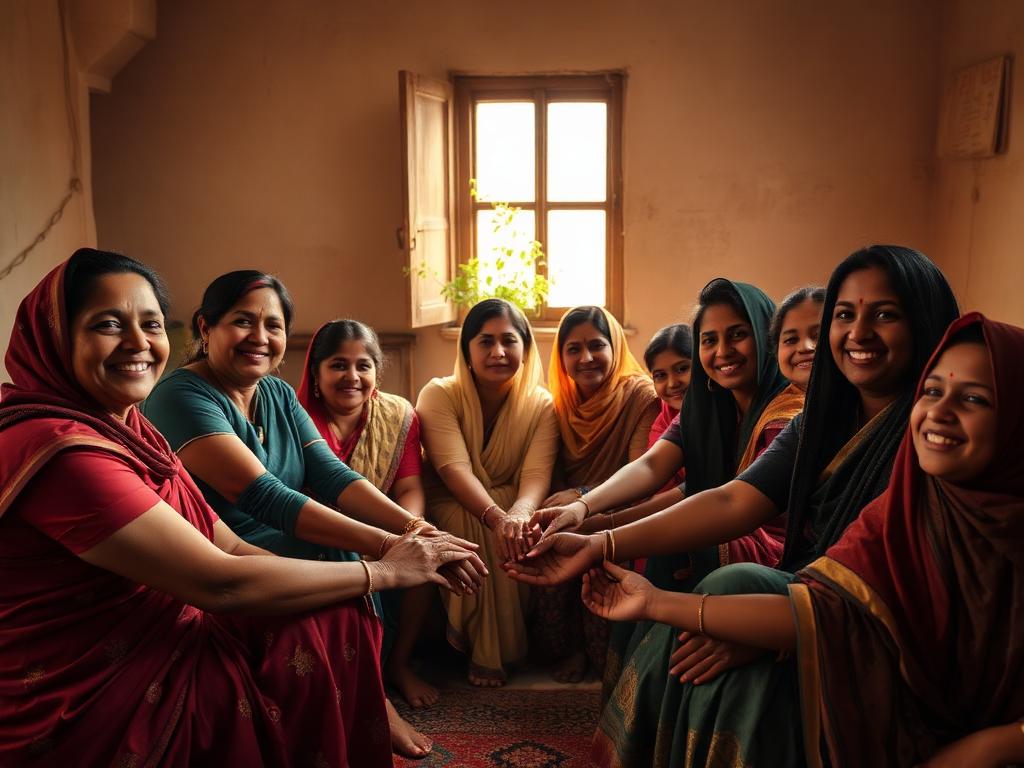
They talk about the atmosphere. They talk about the joy. They talk about the feeling that every person belongs.
That is love made visible.
Sr. Lucy often says that people will usually find food and a place to sleep—even if the meal comes from someone else's scraps and the bed is a piece of cardboard. What they truly long for is love.
That belief shapes every decision at Maher.
There is no waiting list. If someone arrives needing safety, another bedroll is simply rolled out on the floor. Every child is encouraged to dream beyond survival, with support that can continue through university or vocational training. Residents from different faith traditions live together as one family, sharing daily moments of reflection while honoring one another's beliefs.
These aren't just services. They are expressions of a deeper conviction that every person deserves to be seen, valued, and welcomed.
Love also changes how problems are solved.
When a woman is treated with dignity instead of pity, she begins to see herself differently. When a child grows up surrounded by encouragement instead of fear, confidence begins to replace uncertainty. When communities invest in education, opportunity, and belonging, cycles of poverty begin to break—not because someone imposed change from the outside, but because people were empowered from within.
Love doesn't replace practical solutions. It gives them meaning.
It makes education more than a classroom. Healthcare becomes more than medicine. Housing becomes more than shelter. A meal becomes more than nutrition.
Each becomes a reminder to someone who has suffered loss, rejection, or violence: You matter. You belong. Your future is worth believing in.
Perhaps that is why visitors from around the world often arrive expecting to teach and leave feeling transformed themselves.
They discover that Maher's greatest lesson isn't about social work. It's about human relationships.
In a world that often measures success by efficiency, output, and scale, Maher quietly reminds us that the deepest transformations begin with something impossible to measure.
A child who laughs again. A woman who trusts again. A family that begins again.
None of those moments fit neatly into a spreadsheet. Yet they may be the most important outcomes of all.
So, what if love really were the solution?
Not love as a feeling. Not love as an ideal. But love expressed through open doors, patient hearts, shared meals, education, opportunity, and the unwavering belief that every person has immeasurable worth.
If that's true, then changing the world doesn't begin with bigger budgets or better systems alone. It begins wherever someone chooses to see another human being not as a problem to solve, but as a person to love.
That is the quiet revolution Maher has been leading for nearly three decades. And perhaps it is exactly the kind of revolution our world needs most.
Every gift goes straight to Maher's work in India.
Give now